The World Must Draw a Line on Greenland
US pressure over Greenland raises urgent questions about sovereignty and global order
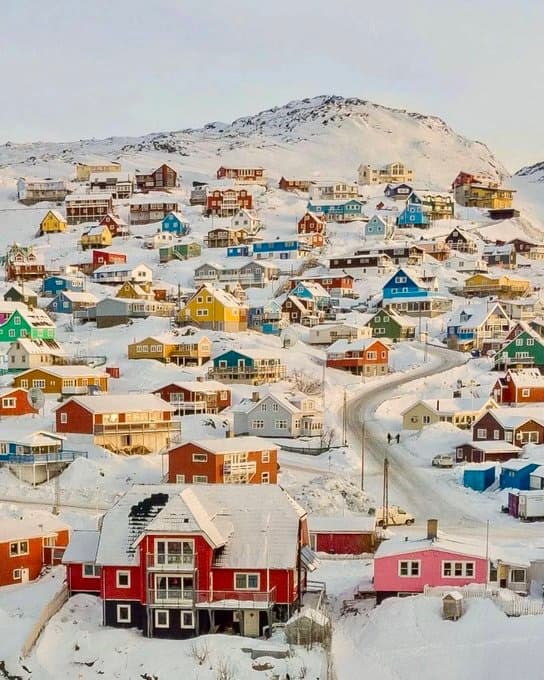
Greenland’s Inuit community amid Arctic landscape
Greenland’s Inuit community amid Arctic landscape
The renewed American insistence on acquiring Greenland is not a harmless eccentricity of foreign policy. It is a profound challenge to the very foundations of sovereignty, democratic consent, and the rules-based international order. Wrapped in the language of “strategic necessity”, this pursuit increasingly resembles something darker: coercive expansionism disguised as security.
When a sitting US president publicly threatens economic punishment against allies unless they surrender territory, the world must pause. Not because Greenland is defenceless, nor because Denmark lacks allies, but because the precedent is catastrophic. If coercion succeeds once, it legitimises its repetition everywhere.
This is no longer only about Greenland. It is about whether power alone defines ownership in the 21st century.
Greenland’s History: A People, Not a PossessionGreenland is not an empty chessboard. Its Inuit population has survived centuries of environmental hardship, colonial neglect and political marginalisation. From Norse exploration in the 11th century to Danish colonial rule in the 18th century, Greenland’s modern political identity has evolved through resilience, not subjugation.
The island ceased to be a colony in 1953, achieved Home Rule in 1979, and secured broader self-government in 2009. Greenlanders are recognised as a people under international law. Their desire for dignity, autonomy and future independence cannot be overridden by foreign appetites.
To reduce this society to a strategic asset is to erase its humanity.
Why Greenland Matters StrategicallyYes, Greenland is geopolitically significant. That is precisely why this issue is so dangerous.
Its location near the Arctic makes it a cornerstone of North Atlantic security architecture. The GIUK Gap — Greenland, Iceland, United Kingdom — remains a vital maritime corridor monitored to track submarine and naval movement. The Pituffik Space Base (formerly Thule Air Base) already provides the United States with missile warning, missile defence and space surveillance capabilities.
The US already enjoys extensive access under existing agreements with Denmark. There is no credible strategic argument that ownership is required for defence. Cooperation already exists. Expansionist ambition does not equal necessity.
The Real Prize: Minerals, Data, and the Arctic FutureBeyond military logic lies the more uncomfortable truth: resources.
Greenland holds vast untapped reserves of rare earth elements, uranium, zinc, lithium, and critical minerals essential to electric vehicles, advanced electronics, renewable technologies and defence systems. As the ice retreats, access becomes easier. The Arctic is no longer just a frontier — it is becoming a treasure vault.
There is also a quieter but equally strategic attraction: Greenland’s cold climate and energy potential make it an ideal future hub for AI data centres and high-performance computing infrastructure. In an age where computational power equals geopolitical power, control of such territory becomes priceless.
This is not security. This is economic conquest.
Tariffs as Weapons: Economic Coercion RedefinedThe use of tariffs as political punishment marks a disturbing shift. When economic instruments are deployed to force sovereign nations into submission, diplomacy collapses into intimidation.
Threatening allies with rising tariffs unless they surrender geopolitical autonomy undermines not only alliances but also the credibility of global trade frameworks. It transforms economic policy into a tool of blackmail.
If such behaviour becomes normalised, no small or medium-sized nation remains safe from coercion.
The Hypocrisy of the ‘Rules-Based Order’For decades, Washington has projected itself as the guardian of democracy and sovereignty. Yet history increasingly tells another story: Iraq dismantled, Libya fractured, Afghanistan abandoned, Gaza devastated, Venezuela pressured, Iran cornered — and now Greenland targeted.
This pattern erodes moral authority. A state cannot preach sovereignty while undermining it. Nor can it champion freedom while dismissing the will of a population because the land beneath them is valuable.
Power without restraint is not leadership. It is domination.
The Dangerous Arithmetic of PowerConsider the imbalance:
The United States, with a population of roughly 349 million and an expanding military-industrial apparatus, is modernising its nuclear forces under a programme projected to cost over $1.7 trillion. Israel, with a population near 11 million, wields outsized military influence in regional affairs.
Are these two states to define the global order by force, threat, and economic pressure?
If demographic and military superiority alone justify political dominance, then international law becomes meaningless ink on fragile paper.
NATO, Article 5, and the Collapse of CredibilityGreenland sits within the Kingdom of Denmark — a NATO member. Any coercive move against Danish sovereignty fundamentally undermines NATO’s Article 5, which guarantees collective defence. If allies threaten each other, the alliance loses coherence. If legal commitments become optional, trust evaporates.
Such behaviour would not weaken only Europe; it would embolden rival powers elsewhere. It would signal that might has replaced law.
Why the World Must Respond TogetherThe response cannot be silence. Nor can it be fragmented condemnation.
Europe, Russia, China, the Middle East, Africa, Latin America — despite their differences — share one interest: the preservation of sovereign equality. No country should possess the privilege to coerce others because of its currency, military, or technological dominance.
If the global community does not draw a firm line now, tomorrow it may be Canada, Taiwan, Palestine, or smaller African and Pacific states that face similar pressure.
This is not anti-American sentiment. It is anti-imperial principle.
Economic Accountability as a Global ToolIf coercion continues, the world must consider its own instruments:
trade pressure, coordinated tariffs, diplomatic isolation, and multilateral resistance.
No superpower is self-sufficient. Even the most technologically advanced economies depend on global supply chains. Economic power, when used collectively, can restrain military arrogance.
Unchecked dominance thrives only when the rest of the world remains divided.
Greenland Is a Warning, Not an ExceptionThis moment is about more than an island. It is about whether the 21st century will be governed by consent or coercion, by cooperation or conquest.
Greenland’s people have spoken. Denmark has spoken. Much of Europe has spoken. The world must now decide whether sovereignty still means something, or whether power has returned to being the only currency that matters.
If the world fails to act now, history will remember this as the moment when silence licensed aggression.
Get the latest updates directly on your WhatsApp
As EU talks mature, Delhi weighs US gains against Russia ties and food security

Hamas–LeT–JeM nexus signals a wider arc of threat India can no longer ignore
New forest rules open public woods to private plantations, risking ecology and justice