Forests for Sale? India’s Quiet Green Shift
New forest rules open public woods to private plantations, risking ecology and justice
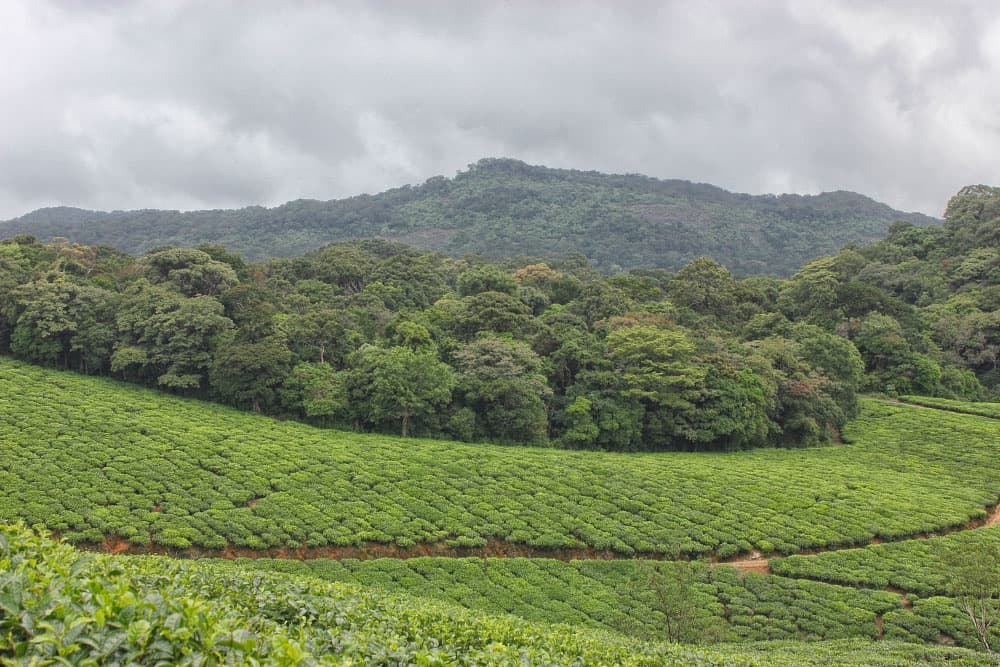
Indian forest landscape in Central India
Indian forest landscape in Central India
India’s forests are not just tracts of land with trees. They are living ecosystems, cultural landscapes, climate shields, and the last refuge for countless species and indigenous communities. Yet, with the January 2026 guidelines issued under the Van (Sanrakshan Evam Samvardhan) Adhiniyam, 2023, the Union government appears to have quietly redrawn the boundaries of what forests mean and who they are for.
The amendment allows private and non-government entities to undertake plantations on forest land, classifying these activities as “forestry” rather than “non-forestry”. At first glance, the move is packaged as pragmatic: restore degraded forests, bring investment, meet the 33% green cover target. But scratch beneath the surface and the uncomfortable question emerges: are we witnessing conservation, or the slow privatisation of India’s natural forests?
The Silence of the Forest GuardiansPerhaps the most troubling aspect is the near-complete silence of the Indian Forest Service and state forest departments. These are the very officials who, under police protection and administrative force, routinely evict tribal families, demolish huts, and uproot subsistence agriculture in the name of protecting forests.
For years, the argument has been consistent: human habitation damages ecology.
Now, the same machinery seems willing to look away when commercial plantations enter forest landscapes under official approval.
Does a corporate plantation suddenly become more “eco-friendly” than a tribal hamlet?
Does profit-driven forestry nurture biodiversity better than community stewardship?
The contrast exposes an uncomfortable double standard one that risks eroding the moral legitimacy of forest governance itself.
What the New Guidelines Actually Do?The January 2026 clarification has far-reaching implications:
Reclassification of plantations as “forestry activities” means private afforestation and assisted natural regeneration are no longer treated as diversion of forest land.
Such projects are now exempt from paying Net Present Value (NPV) the monetary assessment of ecological loss mandated by the Supreme Court.
They are also exempt from Compensatory Afforestation (CA), a core principle designed to ensure “land for land, trees for trees”.
State governments have been given wide discretion to design revenue-sharing models, approve Detailed Project Reports (DPRs), and allow utilisation based on working plans.
In plain terms: the financial and regulatory barriers that once discouraged commercial use of forest land have been systematically lowered.
Plantation Is Not a ForestThe government’s narrative blurs a critical ecological truth: a plantation is not a forest.
Natural forests are complex, multi-layered ecosystems home to native flora, wildlife, pollinators, fungi networks, and water systems evolved over centuries. In contrast, commercial plantations often favour fast-growing monocultures such as eucalyptus, teak, rubber or medicinal crops, chosen for profitability rather than ecological value.
The likely consequences are severe:
Collapse of biodiversity as mixed habitats are replaced with single-species plantations
Disruption of food chains affecting birds, insects, and mammals
Soil and water stress, especially in water-intensive monocultures
Increased vulnerability to pests, disease, and forest fires
Calling such plantations “forest restoration” is not just misleading it is scientifically dishonest.
The Risk of Quiet PrivatisationMany of the so-called “degraded forest lands” are not empty wastelands. They are often community-managed commons, grazing grounds, minor forest produce zones, or landscapes where forest-dwelling communities exercise customary rights.
Leasing or allocating such land to private entities without rigorous recognition of rights under the Forest Rights Act, 2006 risks dispossession by policy rather than bulldozer.
The concern is no longer theoretical. The structure of the guidelines allows states to compete in attracting private investment into forests. A future where chief ministers showcase how many corporates they have “brought into forestry” is not difficult to imagine. What follows is a race to monetise forests, not protect them.
Development at the Cost of Nature: A Global PatternThis policy shift does not exist in isolation. From mega infrastructure plans in the Andaman and Nicobar Islands to mining clearances in ecologically fragile zones like the Aravallis, a broader pattern is visible: nature is increasingly treated as an obstacle to growth rather than its foundation.
Climate change is discussed in air-conditioned conference halls, but on the ground, deforestation, extraction, and commercial exploitation continue unabated. Governments speak the language of sustainability while enabling policies that hollow it out.
The uncomfortable truth is this: no country can claim to take climate seriously while diluting forest protection.
The Economic Argument Falls ShortThe ministry justifies the move as a public-private partnership for conservation and a faster route to green cover targets. But this logic is flawed on multiple fronts.
Removing NPV and CA obligations means less funding for genuine ecological restoration. These mechanisms were not bureaucratic hurdles; they were economic tools designed to recognise that forests provide priceless ecosystem services carbon storage, water regulation, soil protection, and climate buffering.
By eliminating these safeguards, the state effectively signals that ecological loss no longer needs to be compensated if the actor is labelled a “partner”.
A Question of Intent and AccountabilityThis is not merely a technical amendment. It is a philosophical shift in forest governance: from protection to utilisation, from public trust to market logic.
Why were these changes pushed through quietly?
Why has there been no widespread institutional dissent?
Why were forest-dependent communities not taken into confidence?
When laws meant to conserve are repurposed to commercialise, citizens are entitled to question intent.
The Road Ahead: A Course Correction Is Still PossibleIndia still has an opportunity to step back from this precipice. A credible roadmap would include:
Clear legal distinction between natural forests and plantations, with absolute protection for the former
Mandatory application of Forest Rights Act before any plantation approval
Restoration of NPV and CA obligations even for private forestry projects
Independent ecological audits of all DPRs, not just bureaucratic approvals
Prioritising community-led forest management models, which have consistently shown better conservation outcomes
Full transparency on all projects approved under the new guidelines
Conservation cannot be outsourced. Ecology cannot be monetised without consequences.
Forests Are Not Investment AssetsForests are not idle land banks waiting for “productive use”. They are public inheritance — ecological, cultural, and civilisational. The danger posed by the new guidelines is not only environmental but ethical: they redefine forests as economic opportunities rather than living commons.
History will not judge governments by how many plantations they approved, but by how much natural forest they protected.
The question remains stark:
Are we planting trees for the planet or planting policy seeds for the market?
Get the latest updates directly on your WhatsApp

As EU talks mature, Delhi weighs US gains against Russia ties and food security

Hamas–LeT–JeM nexus signals a wider arc of threat India can no longer ignore

US pressure over Greenland raises urgent questions about sovereignty and global order