Lessons in Justice from the Gisèle Pèlicot Case
One woman’s courage has challenged rape culture’s deepest myths; we can learn from her
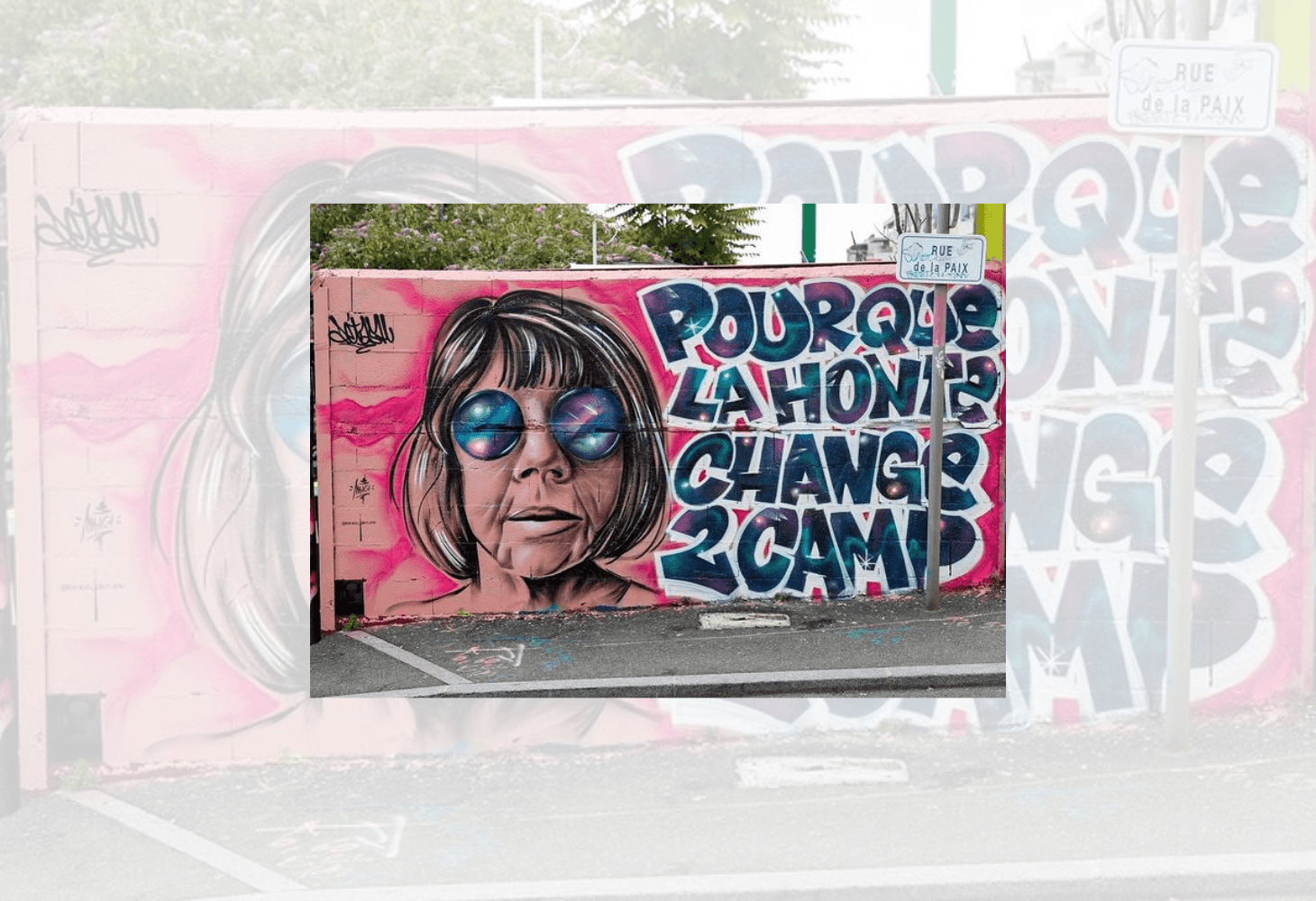
A mural in France reads: Shame must change sides (Pic by Julia Baird)
A mural in France reads: Shame must change sides (Pic by Julia Baird)
Last month, India replaced the traditional version of Lady Justice, originally inspired by Themis of the Greek pantheon and later blindfolded. Our New Lady Justice is saree-clad and, like Themis the Titan, has her eyes wide open. She has no need to avert her eyes or hide away—much like Gisèle Pèlicot, the extraordinary French rape survivor who faced her rapists, all 51 of them, head on in open court.
As the Pélicot trial came to a close on November 27, the prosecutors’ closing included the line: “There’s no such thing as ordinary, accidental, involuntary rape.”
Short, succinct, so powerful in its simplicity—and an unequivocal challenge to anyone who might say otherwise.
In India, where cultural attitudes and judicial norms often trivialize such heinous crimes, government data says a rape occurs every 16 minutes, and that conviction rates remain abysmal. In 2020, the conviction rate was 27.8%, meaning 72 of every 100 people accused of rape walk free.
Apart from Pélicot’s groundbreaking decision to waive her right to privacy and the “ordinariness” of the men accused of raping her, the Avignon trial stands out for the video evidence which negated the “word vs word” arguments that typifiy such cases.
By allowing the public to witness the atrocities committed against her—the “ordinary men” who committed them—Pélicot dismantled the societal silence that often surrounds rape cases. Pélicot’s example also demonstrates how public trials can not only hold perpetrators accountable but also force society to confront uncomfortable truths about consent and misogyny.
While India’s reforms, such as those introduced in the wake of the Nirbhaya case, have expanded the legal definition of rape, significant gaps remain. Indian laws still fail to address the rape of those who identify as anything other than women, perpetuating a narrow view of sexual violence.
Marital rape is not criminalized, meaning the only recourse survivors have is to file for divorce, or file a complaint of domestic violence. Had she been in India, would Gisèle’s ex-husband Dominique—who has admitted to enlisting “dozens” of strangers online to rape his sedated wife—been through a similar wringer? Here, tthe high standard of proof required often tips the scales in favour of the accused.
Indian survivors, frequently subjected to victim-blaming, shaming and even ostracization, face immense pressure to stay silent or settle cases outside the judicial system.
Other societal factors further complicate the pursuit of justice. Education on gender sensitivity and comprehensive sex education remains limited, preventing a broader understanding of consent and boundaries. Pélicot’s approach, rooted in transparency and resilience, shows how reclaiming agency can challenge such entrenched attitudes.
It is a stark reminder that excuses such as “misunderstood consent” or “involuntary acts” cannot hold up against the reality of sexual violence.
For India, her story underscores the need to ensure that survivors have the tools to reclaim their narratives and the support to fight back against stigma and systemic hurdles. By adopting the lessons from Pélicot’s case, India can turn its grim statistics into stories of justice and empowerment—proving, once and for all, that there is no such thing as ordinary, accidental, or involuntary rape.
Get the latest updates directly on your WhatsApp

As EU talks mature, Delhi weighs US gains against Russia ties and food security

Hamas–LeT–JeM nexus signals a wider arc of threat India can no longer ignore

New forest rules open public woods to private plantations, risking ecology and justice